Edge Computing in Manufacturing: Why Processing Data at the Source Changes Everything

Every second, a modern manufacturing plant generates millions of data points. PLC registers cycle through readings, sensors capture temperatures and pressures, vision systems inspect parts, and motor drives report speed and torque values. The question isn't whether to collect this data — it's where to process it.
For the past decade, the default answer was "send everything to the cloud." But manufacturers are learning the hard way that shipping every data point from every machine to a cloud server creates problems: network bandwidth costs, latency that prevents real-time action, dependency on internet connectivity, and enormous cloud compute bills.
Edge computing — processing data at or near the source — is emerging as the practical answer for most manufacturing IIoT applications. Here's why it matters, how it works, and what to consider for your factory.
What Is Edge Computing in Manufacturing?
Edge computing means processing data close to where it's generated rather than sending raw data to a distant cloud server for processing. In manufacturing, "the edge" is the factory floor — specifically, the computing devices that sit near your machines and PLCs.
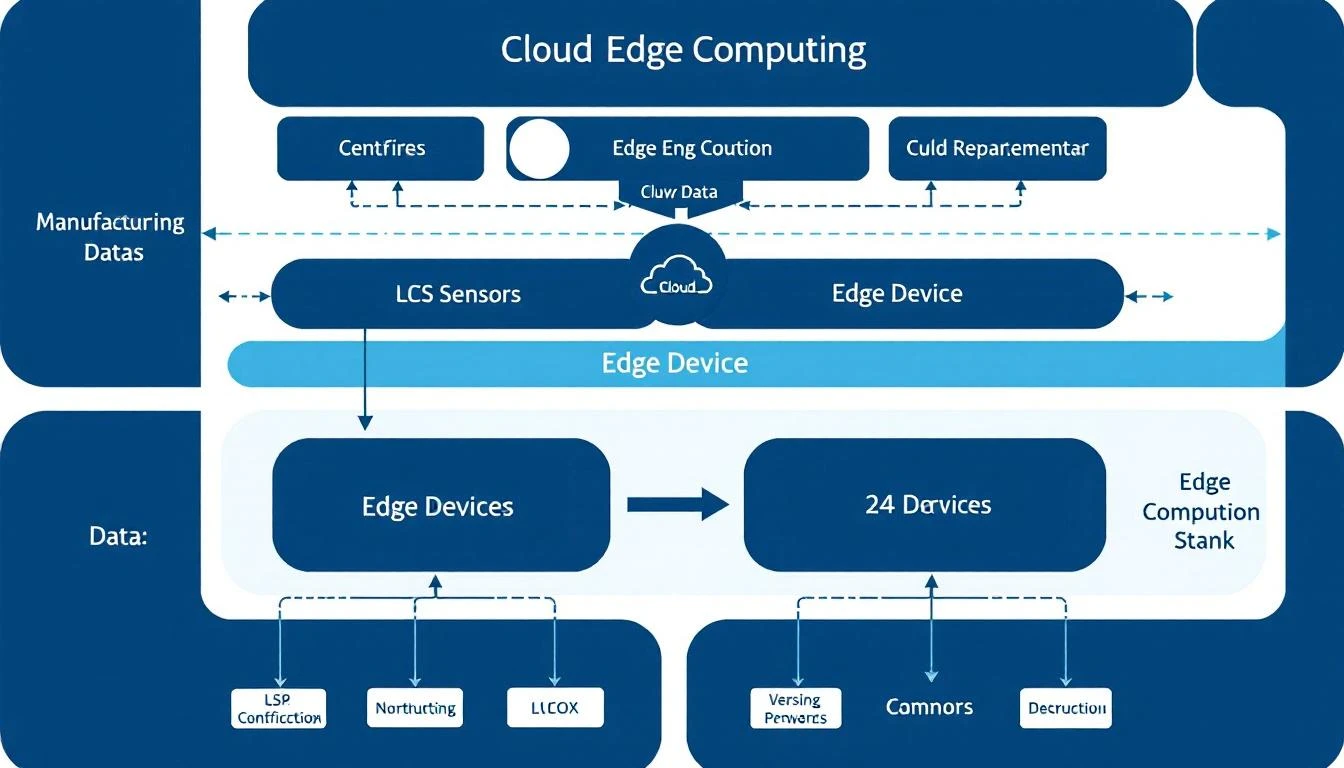
The Edge Computing Stack
A typical edge computing architecture in manufacturing has three layers:
Layer 1: Machine Level PLCs, sensors, and controllers that generate data. These devices read process values (temperatures, pressures, speeds, positions) hundreds or thousands of times per second. They're the data source.
Layer 2: Edge Level Computing devices at or near the factory floor that receive, filter, aggregate, and analyze machine data before deciding what to send to the cloud. This is where edge computing adds value — transforming millions of raw data points into actionable insights locally.
Layer 3: Cloud Level Remote servers that store historical data, run advanced analytics, provide dashboards and reporting, and enable multi-site visibility. The cloud sees summarized, curated data — not the raw firehose.
Why Not Just Send Everything to the Cloud?
Consider a plant with 50 machines, each with a PLC reading 100 data tags every second. That's 5,000 data points per second, or 432 million data points per day. At 50 bytes per data point, that's over 20 GB of raw data daily from a single facility.
Sending 20 GB/day to the cloud is feasible but creates several problems:
- Bandwidth costs: Cellular or dedicated internet connections capable of sustained 2+ Mbps upload aren't free, especially in remote manufacturing locations.
- Cloud storage and compute costs: Storing and processing 7+ TB of data annually per plant gets expensive quickly.
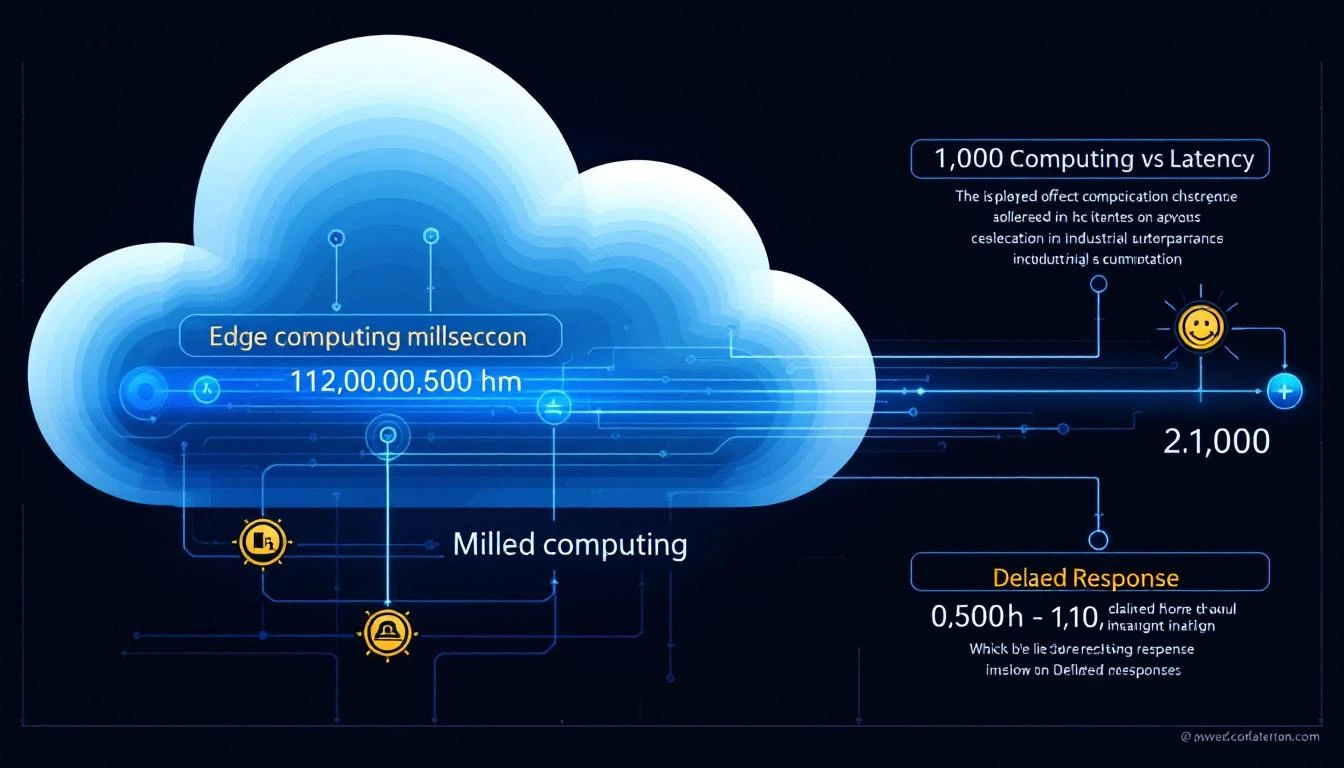
- Latency: A round trip to a cloud server takes 50-200ms. For real-time alerting or control, that's too slow. A hydraulic press doesn't wait 200ms for permission to stop.
- Connectivity dependency: If your internet connection drops, do your machines go blind? Edge computing ensures local monitoring continues regardless of connectivity.
How Edge Computing Transforms Manufacturing Operations
1. Real-Time Anomaly Detection
Edge devices can run anomaly detection algorithms locally, comparing current machine behavior against established baselines in real-time. When a motor's current draw starts climbing 15% above normal, the edge device detects it immediately — no cloud round-trip required.
This matters for failure modes that develop quickly. A bearing seizure can go from "slightly elevated vibration" to "catastrophic failure" in minutes. An edge device monitoring vibration patterns locally can trigger an alarm within seconds of detecting abnormal signatures. A cloud-only architecture might introduce 30-60 seconds of delay that makes the difference between an orderly shutdown and equipment damage.
2. Intelligent Data Filtering
Not all data is worth storing long-term. When a machine is running normally and all parameters are within spec, do you really need to store all 100 tag values every second for 365 days?
Edge computing enables intelligent filtering strategies:
- Change-based reporting: Only send data when values change beyond a threshold. If a temperature holds steady at 185°F for 6 hours, send one reading — not 21,600 identical readings.
- Aggregation: Send 1-minute averages, min/max values, and standard deviations instead of raw per-second data. This reduces data volume by 60x while preserving trend information.
- Exception-based transmission: During normal operation, send summary data. When anomalies are detected, switch to high-resolution data transmission for that machine only.
These strategies typically reduce cloud data volume by 80-95% while preserving all operationally relevant information.
3. Offline Resilience
Manufacturing doesn't stop when the internet goes down. Edge computing ensures your monitoring and alerting capabilities continue regardless of cloud connectivity.
MachineCDN's edge device, for example, continues collecting and buffering data during connectivity interruptions. When the connection restores, buffered data uploads automatically. Operators never lose visibility into machine status, and the historical record remains complete.
This is particularly important for:
- Facilities in areas with unreliable internet
- Plants where IT restricts internet access for security (common in defense, pharmaceutical, and critical infrastructure manufacturing)
- Multi-shift operations where a 30-minute connectivity gap during night shift shouldn't create blind spots
4. Reduced Cloud Costs
Cloud computing costs scale with usage. Less data transmitted, stored, and processed means lower bills. Manufacturers deploying edge computing typically see:
- 60-80% reduction in cloud storage costs (filtered data vs raw data)
- 50-70% reduction in cloud compute costs (pre-processing at the edge reduces cloud-side processing needs)
- 40-60% reduction in data transfer costs (less data transmitted to cloud)
For a mid-size manufacturer, this can translate to $20,000-$100,000 in annual cloud cost savings compared to a cloud-only architecture.
Edge vs Cloud vs Hybrid: What's Right for Your Factory?
Pure Cloud (Becoming Rare)
In a pure cloud architecture, all data goes directly from machines to cloud servers. This approach is simple conceptually but creates the bandwidth, latency, cost, and reliability issues described above.
When it works: Small deployments (5-10 machines) with reliable, high-speed internet and low real-time requirements. Some legacy IIoT platforms still use this architecture.
Pure Edge (Niche Use Cases)
In a pure edge architecture, all processing stays on-premise. No data goes to the cloud. This provides maximum security and minimum latency but sacrifices multi-site visibility, remote access, and the computing power needed for advanced analytics (ML/AI models).
When it works: Highly secure environments (defense manufacturing, certain pharmaceutical operations) where data leaving the facility is prohibited by regulation or policy.
Hybrid Edge-Cloud (The Sweet Spot)
The hybrid approach — which platforms like MachineCDN use — processes data at the edge for real-time monitoring and filtering, then sends curated data to the cloud for historical analysis, AI/ML analytics, dashboarding, and multi-site management.
This is where the industry is heading. It combines the speed and resilience of edge computing with the analytical power and accessibility of cloud computing.
When it works: Almost always. The vast majority of manufacturing IIoT deployments benefit from a hybrid architecture.
Edge Computing Hardware Options for Manufacturing
Industrial PCs and Edge Gateways
Traditional approach: rack-mounted industrial PCs or DIN-rail edge gateways running software from platforms like Litmus, Siemens, or AWS IoT Greengrass.
Pros: Powerful computing, flexible software options, can run complex analytics locally Cons: Expensive ($2,000-$10,000+ per unit), require IT support for OS updates and security patching, generate heat (need cooling), larger physical footprint
Purpose-Built Edge Devices
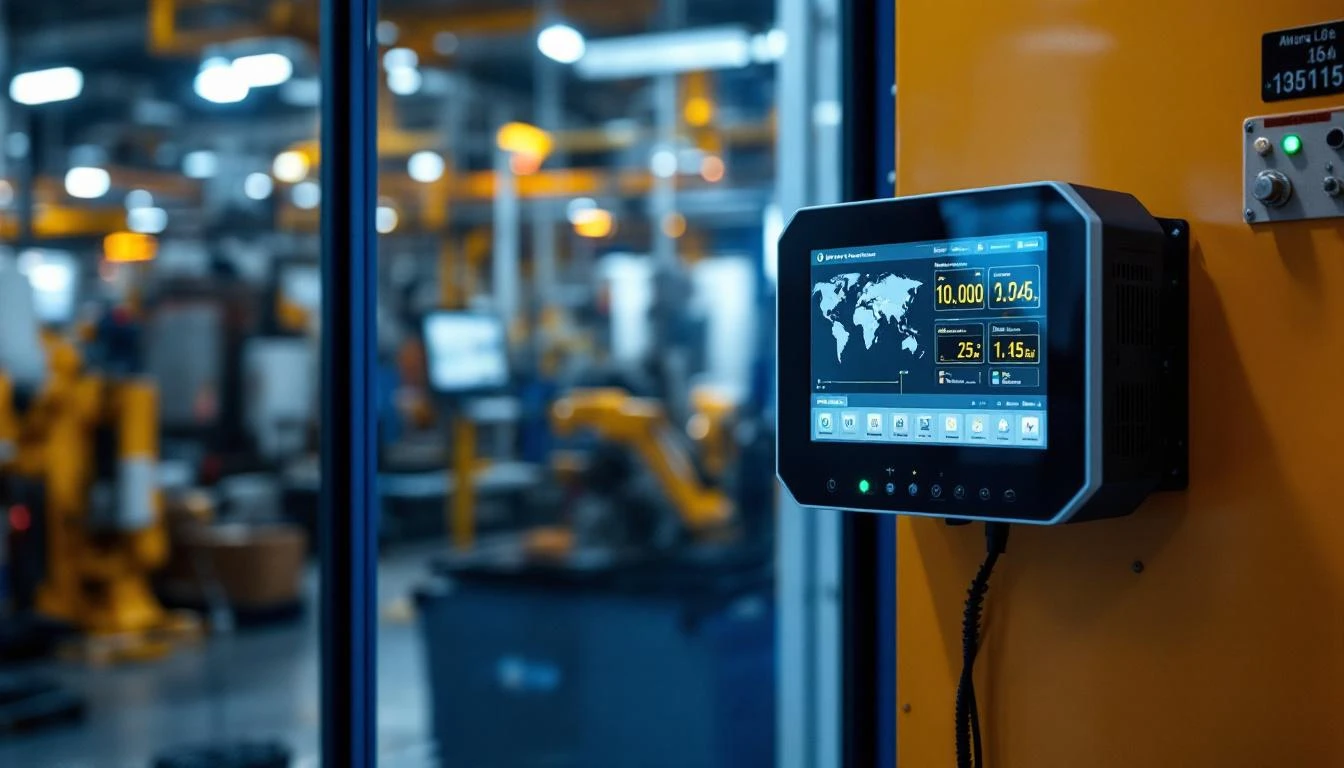
Newer approach: compact, purpose-built devices designed specifically for industrial data collection. MachineCDN's edge device falls into this category — it's a single-purpose device that connects to PLCs, processes data, and communicates via cellular.
Pros: Simple, reliable, low-maintenance, built-in cellular (no IT dependency), purpose-designed for the job Cons: Less flexible than general-purpose edge computers (but that's by design — simplicity is the feature)
Smart Sensors with Edge Processing
Some sensors now include embedded edge computing capabilities — vibration sensors with onboard FFT analysis, for example, or smart cameras with embedded machine vision. These are "edge at the device" rather than "edge at the gateway."
Pros: No separate edge device needed, self-contained Cons: Limited to the specific sensor type, can't aggregate data from multiple sources, vendor lock-in per sensor
Implementing Edge Computing: Practical Considerations
Network Architecture
Edge devices need to communicate with both the machines (PLC network) and the cloud. This typically means:
- Connection to OT network: Ethernet cable to the same network segment as PLCs
- Connection to IT/cloud: Ethernet to internet, Wi-Fi, or cellular
The cellular approach (used by MachineCDN) is gaining popularity because it completely separates OT and IT networks. The edge device talks to PLCs over Ethernet but reaches the cloud via its own cellular modem. IT never needs to touch the factory network.
Security Considerations
Edge devices sit at the intersection of OT and IT networks, making them potential attack vectors. Key security requirements:
- Encrypted communications: All data transmitted to the cloud should use TLS 1.2+ encryption
- Authenticated connections: Mutual TLS or certificate-based authentication between edge and cloud
- Minimal attack surface: Edge devices should run minimal software — not full operating systems with unnecessary services
- Physical security: Edge devices in factory environments should be in locked enclosures
- OTA updates: Firmware updates must be delivered securely to patch vulnerabilities
Scalability Planning
Edge computing scales linearly — each machine (or group of machines) gets its own edge device. This is actually simpler than cloud-only scaling because you're distributing computing rather than concentrating it.
Key questions for scalability:
- How many machines per edge device? (Varies by platform — MachineCDN uses one edge device per machine or small group)
- What's the total data volume at full deployment?
- How will you manage hundreds of edge devices? (Remote management capabilities are essential)
- What happens when edge devices fail? (Redundancy, quick replacement, data buffering)
The Future of Edge in Manufacturing
Edge computing in manufacturing is evolving rapidly:
- AI at the edge: Running inference models directly on edge hardware, enabling real-time prediction without cloud dependency
- Edge-native applications: Manufacturing applications designed edge-first rather than cloud-first
- 5G connectivity: Private 5G networks providing dedicated, low-latency connectivity for edge devices
- Federated learning: Training AI models across edge devices without centralizing sensitive manufacturing data
- Standardization: OPC UA over TSN (Time-Sensitive Networking) creating standardized, deterministic industrial communications
For manufacturers evaluating IIoT platforms today, the key is choosing an architecture that processes data intelligently at the edge while maintaining cloud connectivity for analytics and multi-site management. The platforms that get this balance right — like MachineCDN with its purpose-built edge devices and cloud-based AI analytics — deliver the best combination of speed, reliability, and insight.
Ready to see edge computing in action? Book a MachineCDN demo and experience how purpose-built edge devices deliver machine data from PLC to dashboard in minutes.
Related reading: Best IIoT Platform 2026 | MachineCDN vs PTC ThingWorx | How to Reduce Unplanned Downtime