Best SCADA Alternatives in 2026: Modern Platforms That Replace Legacy Systems

SCADA systems have been the backbone of industrial monitoring for four decades. They've earned their place — when a plant needed visibility into process variables, alarms, and equipment status, SCADA was the only game in town.
But here's what's happening in 2026: manufacturers aren't replacing their SCADA systems because SCADA stopped working. They're looking for alternatives because SCADA was built for a world that no longer exists — a world where data lived on-premise, where remote access meant a VPN headache, where adding a new data point required an integrator and a purchase order.
The modern manufacturing floor demands real-time cloud analytics, mobile access, AI-powered predictive maintenance, and deployments measured in minutes, not months. Legacy SCADA can't deliver that. These alternatives can.
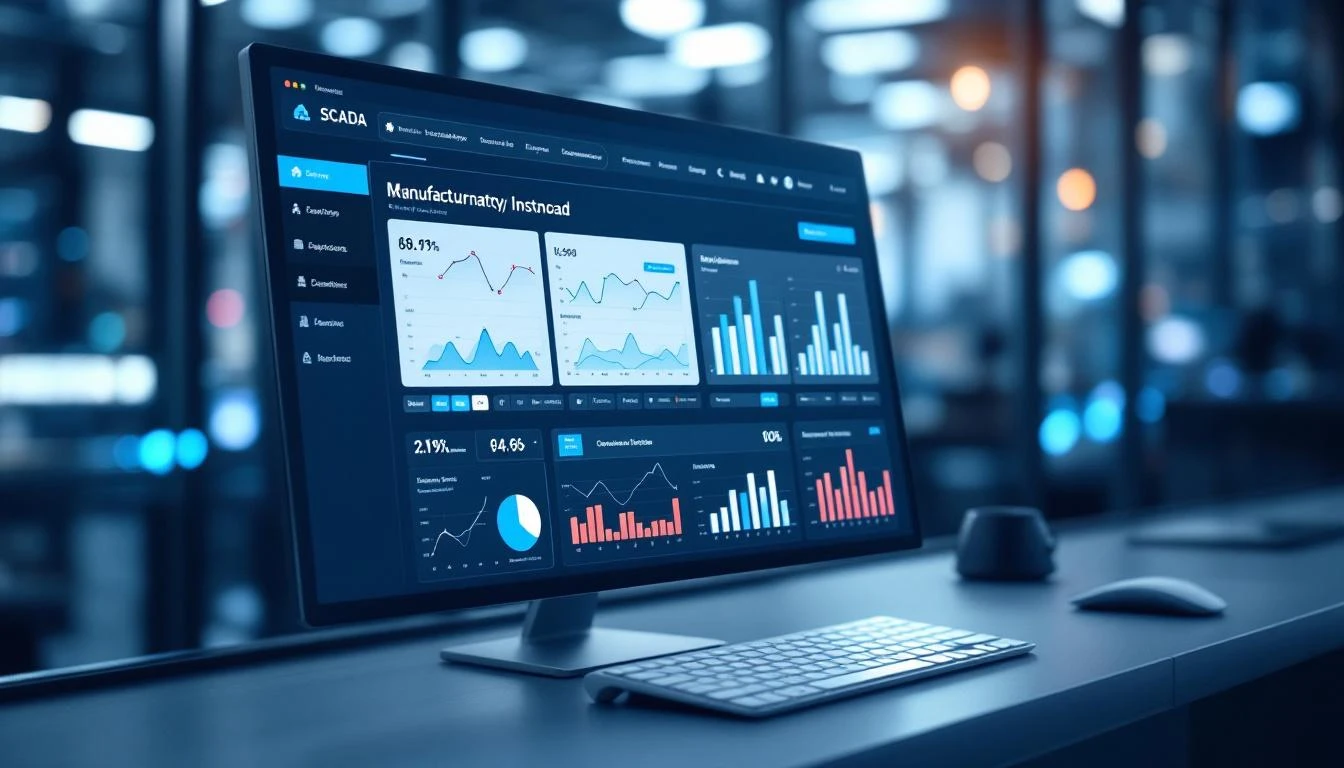
Why Manufacturers Are Moving Beyond SCADA
Before diving into alternatives, let's be honest about what's driving this shift. Not every manufacturer needs to replace SCADA, and some shouldn't. But the pain points driving the search for alternatives are real and growing:
1. Deployment complexity. A traditional SCADA implementation requires servers, networking, database configuration, HMI development, historian setup, and integration engineering. Typical deployments: 6-18 months. For a manufacturer who just wants to know if Machine 7 is running, that's absurd.
2. IT dependency. SCADA lives on the plant network. Every new connection, every remote access request, every software update requires IT involvement. In organizations where OT and IT operate independently (which is most manufacturers), this creates a bottleneck that can delay projects by months.
3. Licensing costs. SCADA licensing models — per-tag, per-server, per-client — create cost structures that scale poorly. A manufacturer monitoring 10,000 tags across 200 machines might pay $50K-$200K+ in software licensing alone, before hardware and integration.
4. Limited analytics. Traditional SCADA excels at real-time visualization and alarm management. But it was never designed for the analytics manufacturers need today: predictive maintenance, OEE optimization, energy benchmarking, cross-plant comparisons, AI-driven insights.
5. Mobile access. Most SCADA web clients are functional but painful on mobile. The plant manager who wants to check line status from their phone gets a desktop interface shrunken to a 6-inch screen.
6. Vendor lock-in. Once you've invested hundreds of thousands in a SCADA platform — the HMI screens, the historian configuration, the alarm strategy, the reporting templates — switching costs are enormous. Your operational knowledge is embedded in a proprietary system.
The Best SCADA Alternatives in 2026
1. MachineCDN — Best for Rapid Deployment and Predictive Maintenance
What it is: A cloud-native IIoT platform that connects directly to PLCs through Ethernet/IP and Modbus protocols, streaming machine data to the cloud over cellular connectivity.
Why it's a SCADA alternative: MachineCDN delivers the core value proposition of SCADA — real-time machine monitoring and alarm management — without the infrastructure. No servers, no plant network, no IT involvement. An edge device plugs into the PLC, auto-detects the machine type, and starts streaming data in about three minutes.
Key advantages over SCADA:
- 3-minute deployment vs months of SCADA integration
- Zero IT involvement — cellular connectivity bypasses the plant network entirely
- AI-powered predictive maintenance — not just monitoring, but failure prediction
- OEE, downtime, and energy analytics built in
- Fleet management across multiple locations from a single dashboard
- Spare parts and PM scheduling integrated with machine monitoring
- 5-week ROI vs 12-18 months for typical SCADA projects
What it doesn't replace: MachineCDN is a monitoring and analytics platform, not a control system. If you need closed-loop control (PID loops, automated valve sequences, batch recipe management), you still need a control system. But for monitoring, alarming, analytics, and predictive maintenance — which is what most SCADA "users" actually use SCADA for — MachineCDN delivers more capability with dramatically less complexity.
Best for: Discrete manufacturers, machine builders, multi-site operations, and any plant where deployment speed and IT independence matter more than process control.
2. Inductive Automation Ignition — Best for Full SCADA Replacement
What it is: A Java-based SCADA/HMI platform that's become the most popular alternative to traditional SCADA vendors (Wonderware, FactoryTalk, WinCC).
Why it's on this list: Ignition isn't a departure from SCADA — it's a modernization of it. If you genuinely need full SCADA capabilities (HMI development, historian, alarm management, scripting, process control visualization) but want a more modern, cost-effective platform, Ignition is the standard answer.
Key advantages:
- Unlimited licensing — no per-tag, per-client, or per-screen charges
- Cross-platform — runs on Windows, Linux, macOS
- Modular architecture — buy only the modules you need
- Active community — large integrator ecosystem and community resources
- Modern web clients — better remote access than legacy SCADA
- Gateway-based architecture — centralized management for multi-site deployments
Limitations:
- Still requires server infrastructure and IT support
- HMI development requires engineering expertise
- Deployment timelines measured in weeks to months
- On-premise architecture with cloud integration as an add-on
Best for: Manufacturers who need true SCADA functionality (HMI, control visualization, historian) and want to escape legacy vendor lock-in without changing their architectural approach.
3. Siemens Insights Hub (MindSphere) — Best for Siemens-Heavy Plants
What it is: Siemens' cloud-based IIoT platform, recently rebranded from MindSphere to Insights Hub, built to connect Siemens industrial equipment to cloud analytics.
Key advantages:
- Deep integration with Siemens PLCs, drives, and automation equipment
- Cloud-native architecture with Azure backend
- App ecosystem for manufacturing analytics
- Strong digital twin capabilities
- Enterprise-grade security and compliance
Limitations:
- Best suited for Siemens-centric environments
- Complex deployment for non-Siemens equipment
- Enterprise pricing that excludes smaller manufacturers
- Significant IT involvement required
- Analytics capabilities lag behind specialized platforms
Best for: Large enterprises with predominantly Siemens automation infrastructure looking for a cloud analytics layer above their existing SCADA.
4. AWS IoT SiteWise — Best for Cloud-First IT Organizations
What it is: Amazon's industrial IoT service for collecting, storing, organizing, and monitoring data from industrial equipment.
Key advantages:
- Native integration with the AWS ecosystem (S3, SageMaker, QuickSight)
- Scalable cloud infrastructure
- Asset modeling for structured data organization
- Edge gateway support for local processing
- Pay-as-you-go pricing
Limitations:
- Requires significant AWS expertise to deploy and manage
- No built-in HMI or visualization beyond basic dashboards
- Edge gateways require IT configuration
- Complexity scales quickly with data volume
- Not purpose-built for manufacturing workflows
Best for: Organizations with existing AWS infrastructure and cloud engineering teams who want to build custom industrial IoT solutions.
5. PTC ThingWorx — Best for AR and Digital Twin Applications
What it is: PTC's IIoT platform focused on connecting industrial assets, building applications, and enabling augmented reality experiences for manufacturing.
Key advantages:
- Strong integration with PTC's Vuforia AR platform
- Kepware connectivity (broad protocol support)
- Application development capabilities
- Digital twin and simulation features
- Large partner ecosystem
Limitations:
- Complex and expensive to deploy
- Requires significant development expertise
- Better as a development platform than a turnkey solution
- Licensing costs can be substantial
- Implementation timelines typically 3-12 months
Best for: Enterprises building custom IIoT applications with augmented reality and digital twin requirements.
6. Tulip — Best for Frontline Operations
What it is: A no-code manufacturing operations platform designed for frontline workers to build and deploy apps on the factory floor.
Key advantages:
- No-code app builder for manufacturing workflows
- Designed for operators, not engineers
- Quick deployment for specific use cases
- Digital work instructions and quality tracking
- Integration with edge devices and sensors
Limitations:
- Not a traditional monitoring platform
- Limited depth for predictive maintenance
- Best for process-centric operations, not machine-centric monitoring
- Requires app development for each use case
- Less suitable for continuous process monitoring
Best for: Manufacturers focused on digitizing manual processes, quality workflows, and operator-driven data collection.
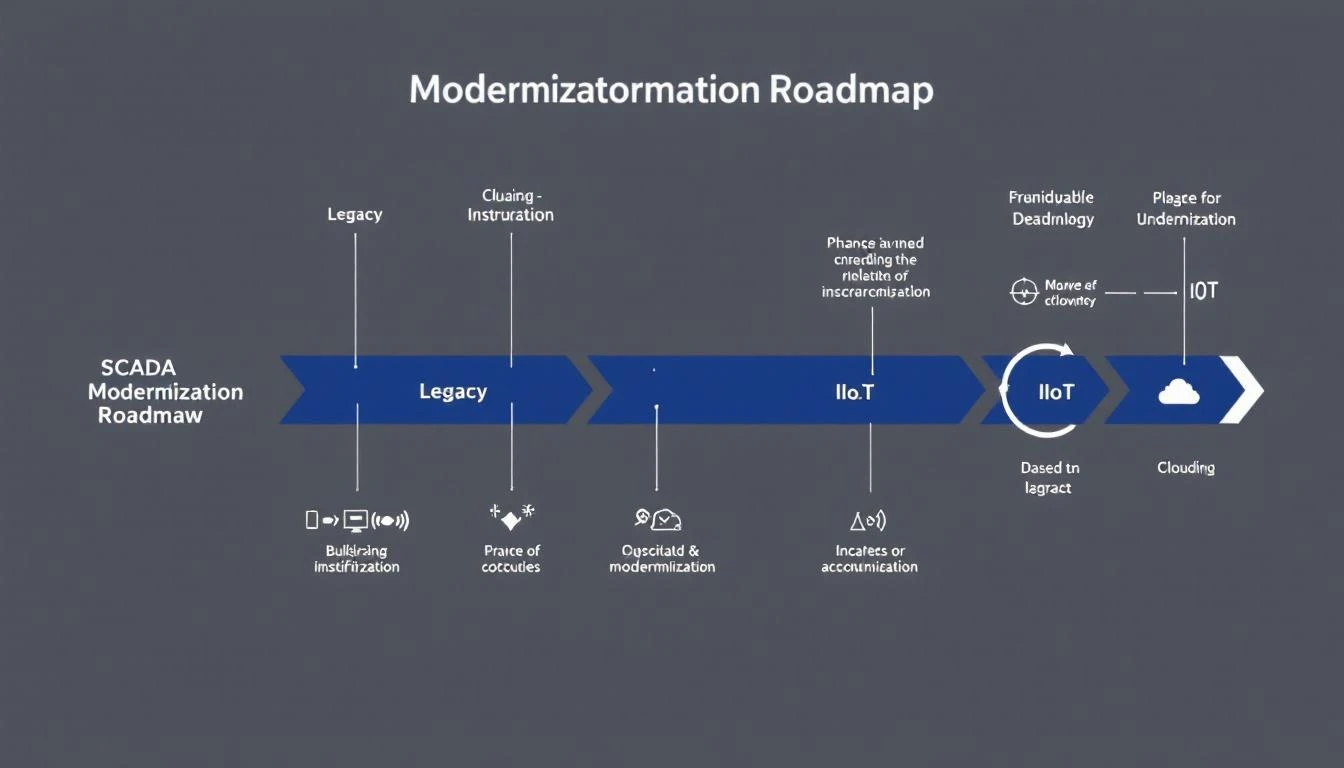
How to Evaluate SCADA Alternatives
The right alternative depends on what you're actually trying to achieve. Here's a decision framework:
If You Need Full Control System Replacement
Go with Ignition. It's the closest modern equivalent to traditional SCADA with dramatically better economics. You'll still need integration engineering, but you'll avoid vendor lock-in and reduce licensing costs by 60-80%.
If You Need Machine Monitoring Without Infrastructure
Go with MachineCDN. If your primary need is real-time machine visibility, predictive maintenance, and manufacturing analytics — and you want it deployed this week, not this quarter — MachineCDN eliminates 90% of the complexity that makes SCADA projects painful.
If You're a Siemens or Rockwell Shop
Consider your vendor's cloud offering (Insights Hub for Siemens, FactoryTalk Cloud for Rockwell). The integration advantage is real, especially if you're already paying for the automation platform. But expect enterprise timelines and enterprise budgets.
If You Have Cloud Engineering Resources
AWS IoT SiteWise or Azure IoT give you maximum flexibility to build exactly what you want. But "flexibility" is a polite word for "you have to build it yourself." Plan for 6-12 months of development before you have a production-ready monitoring system.
The Migration Question
One of the biggest concerns manufacturers have about SCADA alternatives is the migration path. How do you transition without losing historical data, operator familiarity, and alarm configurations?
The honest answer: you probably don't need to migrate SCADA. You need to augment it.
Most SCADA replacement projects fail because they try to replicate the existing system in a new platform — a process that's just as expensive and time-consuming as the original implementation.
The smarter approach:
- Keep SCADA for control — if your SCADA controls processes (opens valves, starts motors, manages batch recipes), leave it in place
- Add an IIoT layer for analytics — deploy a platform like MachineCDN alongside SCADA to get the monitoring, predictive maintenance, and analytics capabilities SCADA lacks
- Gradually shift operators — as users become comfortable with the new platform, they naturally spend less time in SCADA screens and more time in modern dashboards
- Reduce SCADA scope over time — as the IIoT platform proves itself, reduce SCADA licensing and infrastructure to match its actual remaining role (control only)
This approach eliminates migration risk while delivering modern capabilities immediately.
The Total Cost of Ownership Reality
Let's compare the total cost of ownership for monitoring 100 machines across a manufacturing operation:
Traditional SCADA:
- Software licensing: $50K-$200K
- Server infrastructure: $20K-$50K
- Integration engineering: $100K-$300K
- Annual maintenance: $30K-$60K
- Historian licensing: $20K-$50K
- Remote access infrastructure: $10K-$30K
- Year 1 total: $230K-$690K
MachineCDN:
- Edge devices and connectivity: Included in subscription
- Integration engineering: $0 (auto-detects PLCs)
- IT infrastructure: $0 (cloud-native, cellular)
- Year 1 total: A fraction of traditional SCADA
- Deployed in: Days, not months
The cost difference is dramatic — but the time difference is the killer. The manufacturer using MachineCDN has been monitoring machines and preventing downtime for months before the SCADA project even finishes integration testing.
Conclusion
SCADA isn't dead — it still serves critical control functions in process manufacturing. But for the monitoring, analytics, and predictive maintenance capabilities that modern manufacturers need, cloud-native alternatives deliver more value with less complexity.
The best SCADA alternative isn't the one with the longest feature list — it's the one that gets deployed, gets used, and delivers measurable results before the next budget cycle.
For manufacturers who want real-time machine monitoring and predictive maintenance without the weight of traditional SCADA infrastructure, MachineCDN is purpose-built for exactly that challenge.
Ready to modernize beyond SCADA? Book a demo and see real-time machine data flowing in minutes — not months.