Industry 4.0 Implementation Guide: A Practical Roadmap for Manufacturing Leaders

Industry 4.0 has been discussed, debated, and presented at conferences for over a decade. The concept — originally coined by the German government in 2011 — envisioned a fourth industrial revolution driven by cyber-physical systems, IoT, cloud computing, and AI. Fifteen years later, most manufacturers are still trying to figure out what it actually means for their specific operation and how to get started without spending millions on a transformation that may never deliver.
This guide skips the buzzword bingo and delivers a practical, phased roadmap that manufacturing leaders — plant managers, VPs of Operations, COOs — can actually execute. No McKinsey-scale transformation budgets required.
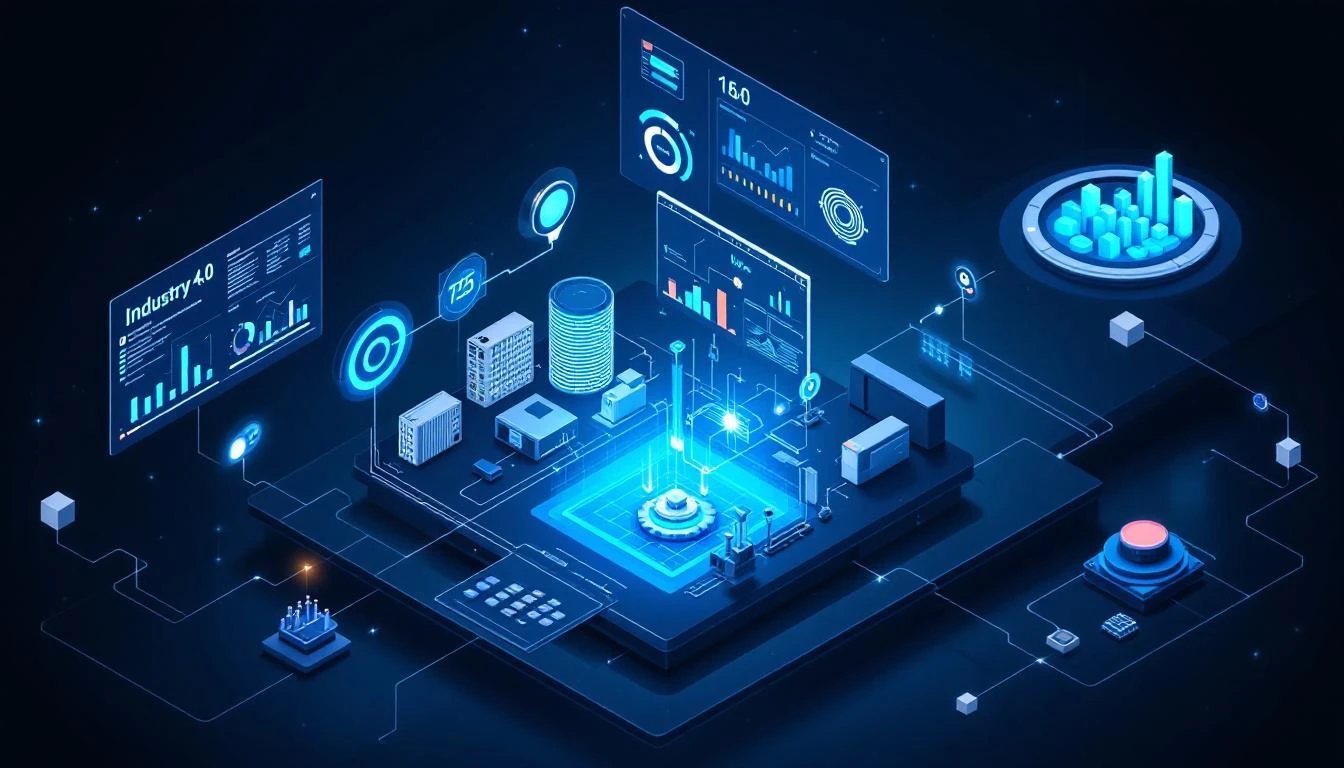
What Industry 4.0 Actually Means for Your Plant
Strip away the hype, and Industry 4.0 comes down to four capabilities:
1. Visibility
Can you see what's happening across your operation in real time — from anywhere?
Most manufacturers today have visibility gaps. Machine status requires a floor walk. Production data is on clipboards. OEE is calculated monthly, two weeks after the fact. Alarms are known only to the operator on that shift.
Industry 4.0 visibility: Every machine, every parameter, every plant — visible in real time on a unified dashboard. If a critical machine enters an alarm state at 2 AM, the maintenance manager knows within seconds.
2. Transparency
Can you understand WHY things happen, not just WHAT happened?
Visibility tells you Machine 7 was down for 3 hours yesterday. Transparency tells you it was down because bearing temperature spiked at 2:14 PM after running at 15% above normal load for the previous 6 hours due to a batch change that increased material hardness.
Industry 4.0 transparency: Correlated data across multiple parameters, machines, and systems enables root cause analysis. Downtime isn't just logged — it's explained.
3. Predictability
Can you anticipate problems before they happen?
The shift from reactive to predictive maintenance is the highest-ROI element of Industry 4.0 for most manufacturers. Instead of waiting for equipment to fail (reactive) or replacing parts on a calendar (preventive), you use data and AI to predict when specific components will actually need attention.
Industry 4.0 predictability: AI models trained on historical sensor data predict failures 2-6 weeks in advance with >80% accuracy. Maintenance transitions from a cost center to a strategic advantage.
4. Adaptability
Can your operation self-optimize based on changing conditions?
This is the frontier. Adaptive manufacturing means the system adjusts parameters automatically — line speed based on material quality, maintenance schedules based on actual equipment condition, production sequences based on real-time demand signals.
Industry 4.0 adaptability: Closed-loop systems where digital insights drive physical actions with minimal human intervention. Most manufacturers are 3-5 years away from meaningful adaptability, but the foundation (visibility + transparency + predictability) needs to be built now.
Assessing Where You Are Today
Before building a roadmap, honestly assess your current maturity level:
Level 0: Disconnected
- Machines run independently with no data connectivity
- Maintenance is reactive ("run to failure") or calendar-based
- Production data is manual (clipboards, spreadsheets)
- Downtime causes are anecdotal, not data-driven
- Cross-plant visibility doesn't exist
If this is you: You're not behind — you're at the starting line with 75% of the manufacturing industry. The good news is that jumping from Level 0 to Level 2 has never been faster or cheaper.
Level 1: Connected
- Some machines have data connections (SCADA, local historians)
- Basic HMI screens show real-time machine status at the machine
- Data exists but is siloed (each machine, each line, each plant is separate)
- Limited remote access (VPN to SCADA maybe)
- Some threshold-based alerting
If this is you: You have the raw materials. Your next step is unifying this data into a single platform and adding intelligence.
Level 2: Visible
- Centralized IIoT platform aggregating data from multiple machines
- Real-time dashboards accessible from anywhere (office, phone, home)
- Automated OEE tracking
- Alert notifications via email, SMS, or push
- Historical data storage enabling trend analysis
If this is you: You've built the foundation. Now it's time for analytics and prediction.
Level 3: Intelligent
- Predictive maintenance active on critical assets
- AI-powered anomaly detection identifying issues before failures
- Root cause analysis driven by correlated data
- Energy optimization based on real-time consumption data
- Fleet-wide optimization across multiple plants
If this is you: You're ahead of 90% of the industry. Focus on expanding coverage and adding prescriptive capabilities.
Level 4: Self-Optimizing
- Closed-loop systems adjusting process parameters automatically
- Digital twins running real-time simulation alongside production
- Autonomous maintenance scheduling
- Self-learning systems that improve without manual model retraining
If this is you: You're at the cutting edge. Most manufacturers will reach this level for selected processes by 2028-2030.
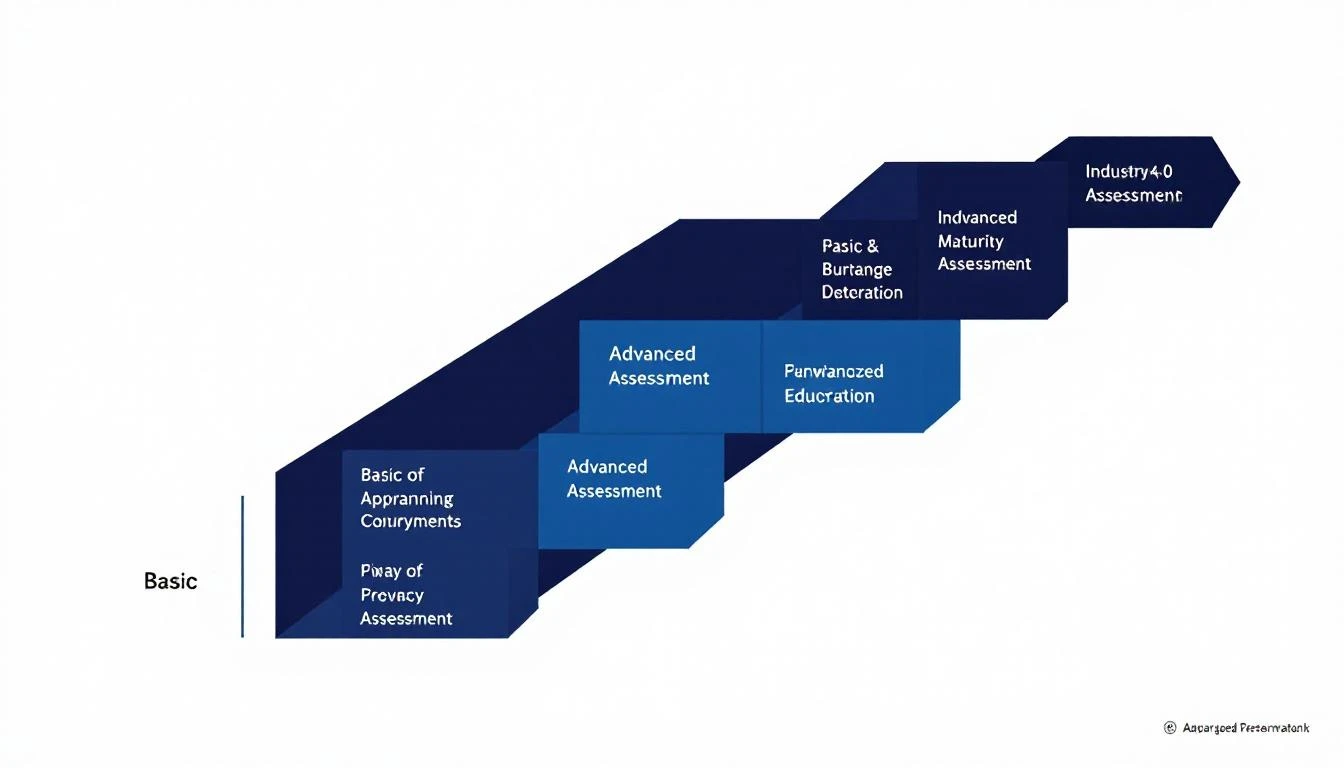
The 12-Month Implementation Roadmap
Month 1-2: Foundation
Goal: Connect your first 5-10 critical machines to a cloud IIoT platform.
Actions:
- Criticality assessment: Rank equipment by downtime impact. Our predictive maintenance guide has a detailed framework for this.
- Platform selection: Evaluate 2-3 IIoT platforms. Criteria that matter most:
- Time to first value (days, not months)
- PLC protocol support (Ethernet/IP, Modbus, OPC UA)
- Cellular connectivity option (bypass IT bottleneck)
- Built-in AI/ML (not "bring your own data scientist")
- Manufacturing-specific features (OEE, maintenance, alarms)
- Install edge gateways: Connect PLCs to the cloud. With cellular-based platforms like MachineCDN, this takes 3 minutes per device — no IT involvement, no plant network changes.
- Configure dashboards: Machine status overview, key parameter trends, alarm history
- Set up basic alerts: Temperature high, pressure low, machine stopped unexpectedly
Investment: $5,000-20,000 (hardware + platform subscription for 5-10 machines)
Expected outcomes:
- Real-time visibility into critical equipment status
- Automatic downtime logging (no more clipboards)
- Instant notification when something goes wrong
Month 3-4: Intelligence
Goal: Add predictive capabilities and automated OEE tracking.
Actions:
- Enable anomaly detection: With 2+ months of historical data, enable the platform's AI models
- Configure OEE calculations: Map machine state (running/idle/alarm) and production data (cycle count, reject count) to OEE metrics
- Build shift comparison reports: Which shift performs better? Which operators have higher OEE?
- Set up predictive alerts: Machine learning-based alerts that flag degradation trends, not just threshold crossings
- Integrate with CMMS: Predictive alerts generate work orders automatically
Investment: Minimal incremental cost (platform features, 2-4 hours configuration)
Expected outcomes:
- First predicted failure avoidance (this alone often covers Year 1 costs)
- Automated OEE tracking replaces manual calculation
- Data-driven maintenance planning instead of gut feeling
Month 5-8: Expansion
Goal: Scale to 20-50 machines, add energy monitoring and fleet visibility.
Actions:
- Add more machines: Apply the proven process from Month 1-2 to the next tier of critical assets
- Add energy monitoring: Per-machine power monitoring to identify waste and optimize consumption
- Build fleet dashboards: Cross-plant comparison, top-performing vs. underperforming assets
- Standardize best practices: What the data shows works on the best-performing machines → apply to all
- Train maintenance team: Ensure every maintenance technician can access and use the platform
Investment: $15,000-60,000 (additional hardware + platform scaling)
Expected outcomes:
- 20-30% reduction in unplanned downtime (typical for this stage)
- 15-25% reduction in maintenance costs
- 10-15% energy cost reduction
- Fleet-wide visibility enabling cross-plant optimization
Month 9-12: Optimization
Goal: Advanced analytics, quality correlation, and organizational transformation.
Actions:
- Quality correlation: Link process parameters (temperature, pressure, speed) to quality outcomes (defect rates, dimensional variation)
- Production optimization: Use historical data to identify optimal operating parameters for each product/material combination
- Spare parts optimization: Predictive models drive just-in-time parts ordering
- Digital twin foundation: With a year of data, you can build meaningful simulation models for critical processes
- Executive dashboard: Aggregate KPIs (OEE, availability, maintenance cost, energy cost) for leadership visibility
Investment: $10,000-30,000 (additional platform features, integration work)
Expected outcomes:
- Quantified ROI: specific dollar savings from prevented downtime, reduced maintenance costs, energy savings, quality improvements
- Data-driven culture shift: decisions based on data, not opinion
- Foundation for advanced Industry 4.0 capabilities (digital twins, adaptive manufacturing)
Technology Selection: What Actually Matters
After hundreds of Industry 4.0 implementations, here's what determines success:
Time to Value Matters More Than Feature Count
A platform that delivers basic machine monitoring in 1 week is infinitely more valuable than a platform that promises advanced analytics in 18 months. The organization needs to see value early to maintain funding and enthusiasm.
MachineCDN's 3-minute device setup and 5-week ROI exist specifically because time-to-value is the #1 predictor of deployment success.
Connectivity Method Determines Timeline
If your IIoT platform requires plant network integration, add 3-6 months for IT approval. If it uses cellular, you bypass this entirely. Choose accordingly based on your urgency and organizational dynamics.
Manufacturing-Specific Beats General Purpose
AWS IoT, Azure IoT, and Google Cloud IoT are powerful — but they're building blocks, not solutions. You need to assemble protocol drivers, time-series databases, dashboards, alerting, OEE calculations, maintenance workflows, and mobile apps yourself. Purpose-built manufacturing platforms provide these out of the box.
AI Should Be Embedded, Not Bolt-On
If the vendor's AI strategy is "export your data to Jupyter notebooks," you need a data science team. If AI is embedded in the platform (anomaly detection, predictive maintenance, energy optimization as features), your manufacturing team can use it directly.
Budgeting Realistically
| Phase | Machines | Timeline | Investment | Annual ROI |
|---|---|---|---|---|
| Foundation | 5-10 | 2 months | $5-20K | $50-200K |
| Intelligence | 5-10 | 2 months | $2-5K | $100-500K |
| Expansion | 20-50 | 4 months | $15-60K | $300K-1M |
| Optimization | 50+ | 4 months | $10-30K | $500K-2M |
| Total Year 1 | 20-50 | 12 months | $32-115K | $500K-2M |
ROI is driven primarily by:
- Prevented unplanned downtime ($10K-250K per incident)
- Maintenance cost reduction (25-30% typical)
- Energy savings (10-15% typical)
- Quality improvement (reduced scrap, rework, warranty)
- Labor efficiency (automated data collection replaces manual processes)
The Organizational Challenge
Technology is 30% of Industry 4.0. Organizational change is 70%.
What needs to change:
- Maintenance mindset: From "fix what's broken" to "prevent what might break"
- Decision-making: From opinion-based to data-based
- Collaboration: IT and OT teams working together (or bypassed via cellular)
- Skills: Maintenance techs comfortable with dashboards and data analysis
- Leadership: Continuous investment in data infrastructure, not one-time project budgets
How to drive the change:
- Start with champions, not mandates
- Show value before asking for more budget
- Make the platform easier than the clipboard (or nobody will use it)
- Celebrate wins publicly (first predicted failure prevention becomes a story)
- Accept that not everyone will adopt at the same speed
Getting Started This Week
Industry 4.0 is not a destination — it's a direction. Every step toward better visibility, smarter maintenance, and data-driven decisions moves you forward.
The first step is always the same: connect your machines and collect data. Everything else — predictive maintenance, OEE optimization, digital twins, AI — builds on that foundation.
Book a demo with MachineCDN to see how manufacturers implement Industry 4.0 in weeks, not years. 3-minute device setup, zero IT involvement, AI-powered analytics, and the fastest time-to-value in the industry.
Related reading: