IoTFlows Pricing in 2026: What Does IoTFlows Actually Cost?

If you're evaluating IoTFlows for your manufacturing operation, the first question is obvious: what does it actually cost? Unlike traditional software purchases where you pay a license fee and move on, IoTFlows combines proprietary hardware with cloud subscriptions — and that dual-cost model deserves careful examination before you commit.
Understanding IoTFlows' Pricing Model
IoTFlows doesn't publish transparent pricing on their website — a common pattern among IIoT vendors that makes budget planning difficult. What we know from public information and customer reports is that IoTFlows operates on a hardware-plus-subscription model that includes several cost components.
Hardware Costs: SenseAi Sensors
The foundation of IoTFlows' approach is their proprietary SenseAi sensor hardware. This is where the first major cost hits:
- SenseAi sensors — Purpose-built vibration and acoustic monitoring devices that attach to your equipment
- SenseAi Embedded (IP67) — Ruggedized versions for harsh industrial environments
- BeamTracker — Laser-based tracking sensors for specific use cases
Each machine you want to monitor requires at least one SenseAi sensor, and many machines need multiple sensors depending on the monitoring points. For a facility with 50 machines, you're looking at potentially 100-200+ sensors before any software subscription begins.
Subscription Fees
Beyond hardware, IoTFlows charges recurring subscription fees for:
- Cloud platform access
- AI-powered analytics and health scoring
- OEE monitoring dashboards
- Downtime root cause analysis features
- Job scheduling and production tracking
The subscription is typically priced per-sensor or per-machine, meaning your monthly costs scale linearly with the number of monitored assets.
Installation and Setup Costs
SenseAi sensors require physical installation on each machine. While IoTFlows claims straightforward mounting, the reality for most plants includes:
- Installation labor — Each sensor needs to be physically mounted in the correct position
- Connectivity setup — Sensors need network connectivity to reach IoTFlows' cloud
- Calibration — Vibration and acoustic sensors require baseline calibration per machine
- IT coordination — Any cloud-connected device needs IT security review
For a 50-machine deployment, installation alone can take days to weeks depending on machine accessibility and IT requirements.
Hidden Costs Most Buyers Miss
1. Hardware Replacement and Maintenance
Industrial sensors in factory environments face harsh conditions — vibration, heat, dust, coolant spray. SenseAi sensors will need replacement over their lifecycle. Budget for a 10-15% annual replacement rate for sensors in demanding environments.
2. Scaling Costs Are Linear
Because IoTFlows requires a physical sensor per monitoring point, scaling to additional machines or facilities means purchasing more hardware every time. There's no marginal cost decrease as you grow — machine #200 costs just as much to instrument as machine #1.
3. Vendor Lock-In
IoTFlows' proprietary hardware creates significant switching costs. If you decide to change platforms in 2-3 years, your SenseAi sensors become expensive paperweights. You can't repurpose proprietary vibration sensors for a different platform.
4. Limited Monitoring Scope
SenseAi sensors monitor vibration and acoustics. If you also need temperature monitoring, energy consumption tracking, cycle counting, or material flow data, you'll need additional sensors or integrations — each with their own costs.
IoTFlows vs. Protocol-Native Alternatives: Total Cost of Ownership
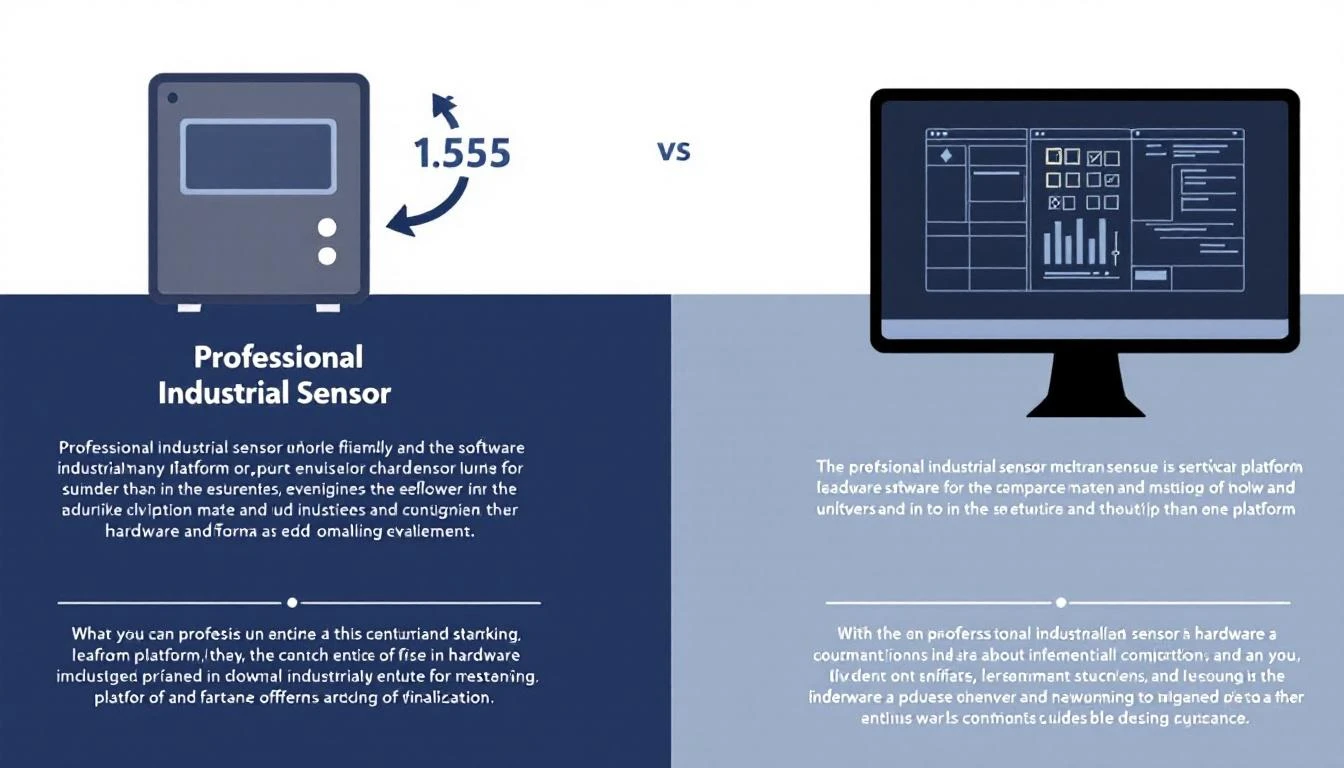
The most meaningful comparison isn't monthly subscription cost — it's total cost of ownership (TCO) over 3-5 years. Here's where the hardware-dependent model shows its weakness.
The Hardware-Overlay Approach (IoTFlows)
| Cost Category | Year 1 | Year 2 | Year 3 | 3-Year Total |
|---|---|---|---|---|
| Sensor hardware (50 machines) | $$$$ | — | — | $$$$ |
| Sensor replacements (10%/yr) | — | $$ | $$ | $$ |
| Installation labor | $$$ | — | — | $$$ |
| Cloud subscription | $$$ | $$$ | $$$ | $$$$$ |
| IT integration | $$ | $ | $ | $$ |
| Estimated Range | $75K-150K+ |
The Protocol-Native Approach (MachineCDN)
Platforms like MachineCDN take a fundamentally different approach: instead of adding sensors on top of your machines, they connect directly to the PLCs and controllers that already run your equipment.
| Cost Category | Year 1 | Year 2 | Year 3 | 3-Year Total |
|---|---|---|---|---|
| Hardware (edge gateway) | $ | — | — | $ |
| Installation (3-minute setup) | Minimal | — | — | Minimal |
| Cloud subscription | $$ | $$ | $$ | $$ |
| IT involvement | Zero (cellular) | — | — | Zero |
| Estimated Range | $15K-40K |
The difference is stark. Protocol-native platforms leverage the data your PLCs are already generating — no additional sensors needed. One edge device can monitor dozens of machines simultaneously.
What IoTFlows Does Well (And Where It Falls Short)
Strengths Worth Acknowledging
- Vibration-specific AI — IoTFlows has invested heavily in vibration and acoustic analysis. Their machine health scoring across 7 metrics (cavitation, looseness, imbalance, lubrication, alignment, bearing, temperature) is genuinely specialized.
- Purpose-built hardware — SenseAi sensors are designed specifically for industrial vibration monitoring. That specialization has value for pure condition monitoring use cases.
- YC backing — Y Combinator backing provides some validation and suggests the company has passed at least basic due diligence.
Where IoTFlows Falls Short on Value
- No materials or inventory management — IoTFlows focuses exclusively on machine health. If you need to track raw material consumption, hopper levels, or production materials, you'll need a separate system entirely.
- No fleet management — Multi-site, multi-zone machine fleet visibility isn't a core IoTFlows capability. Managing equipment across locations requires workarounds.
- No spare parts tracking — While IoTFlows can tell you a bearing is degrading, it can't tell you if the replacement bearing is in stock. That disconnect between monitoring and maintenance execution is a gap.
- No energy monitoring — Energy consumption per machine isn't tracked through vibration sensors. You'll need yet another system for energy management.
- Hardware dependency creates fragility — If a SenseAi sensor fails, you lose visibility on that machine until replacement hardware arrives and is installed.
Questions to Ask IoTFlows During Your Evaluation
If you're in active conversations with IoTFlows sales, here are the questions that separate informed buyers from easy targets:
- "What's the all-in cost per machine per month, including hardware amortization?" — Don't let them quote just the subscription. You need the full picture.
- "What happens to my data and hardware if I cancel?" — Understand the vendor lock-in implications.
- "How many sensors do I need per machine type?" — A CNC mill might need sensors in different positions than a press brake. Get machine-specific sensor counts.
- "What's the sensor failure rate in environments like mine?" — Ask for data from similar operating conditions (temperature, vibration levels, contamination exposure).
- "Can I monitor anything beyond vibration and acoustics?" — If you need cycle counts, energy data, material tracking, or production metrics, understand what IoTFlows can't provide.
- "What's the typical deployment timeline for 50+ machines?" — Sensor-by-sensor installation takes time. Get realistic timelines, not marketing claims.
The Bottom Line on IoTFlows Pricing
IoTFlows' hardware-plus-subscription model can work for organizations that specifically need vibration-based condition monitoring and have the budget for per-machine sensor deployment. The AI behind their health scoring is legitimate.
But for manufacturers who need comprehensive factory visibility — machine status, maintenance scheduling, materials tracking, energy monitoring, fleet management, and threshold alerting — a protocol-native platform that connects to existing PLCs delivers more capability at lower total cost.
MachineCDN connects to your existing equipment in 3 minutes per device, requires zero IT involvement through cellular connectivity, and provides the full spectrum of manufacturing intelligence without proprietary hardware costs. That's a fundamentally different value proposition than buying sensors for every machine.
Ready to see the difference? Book a demo and we'll show you what protocol-native monitoring looks like with your actual equipment.
Related reading: